1. Balance
Holding the body steady while moving: beams, wobble steps, rope bridges and trampoline landings.
Balance · Hand-Eye · Bilateral · Timing
Coordination is the ability to make different body parts work together at the right time. Indoor playgrounds train it naturally — if the layout mixes the right challenges. This guide maps four coordination skills to specific play features for children aged 4 to 10, so operators and schools can explain the value and plan a route that trains all four.
Design Framework
Each skill needs a different kind of challenge. A good layout includes all four in one loop.
Holding the body steady while moving: beams, wobble steps, rope bridges and trampoline landings.
Tracking and reacting with the hands: ball targets, catching games, interactive wall games and basketball hoops.
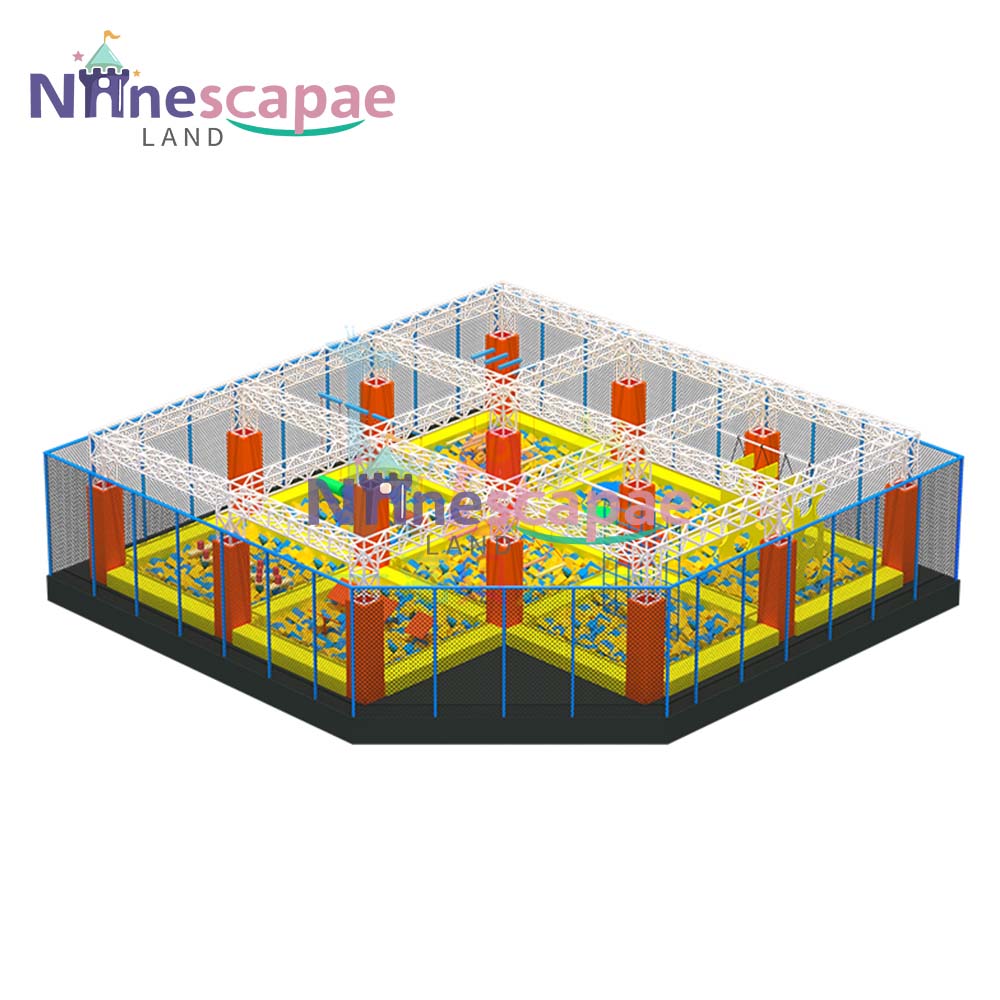
Using both sides of the body together or in turn: climbing nets, monkey bars, crawling tunnels and ladders.
Moving at the right moment: rotating obstacles, jumping lanes, swinging ropes and reaction lights.
Arrange features so a child meets each skill every lap, with easier and harder options side by side.
Equipment Mix
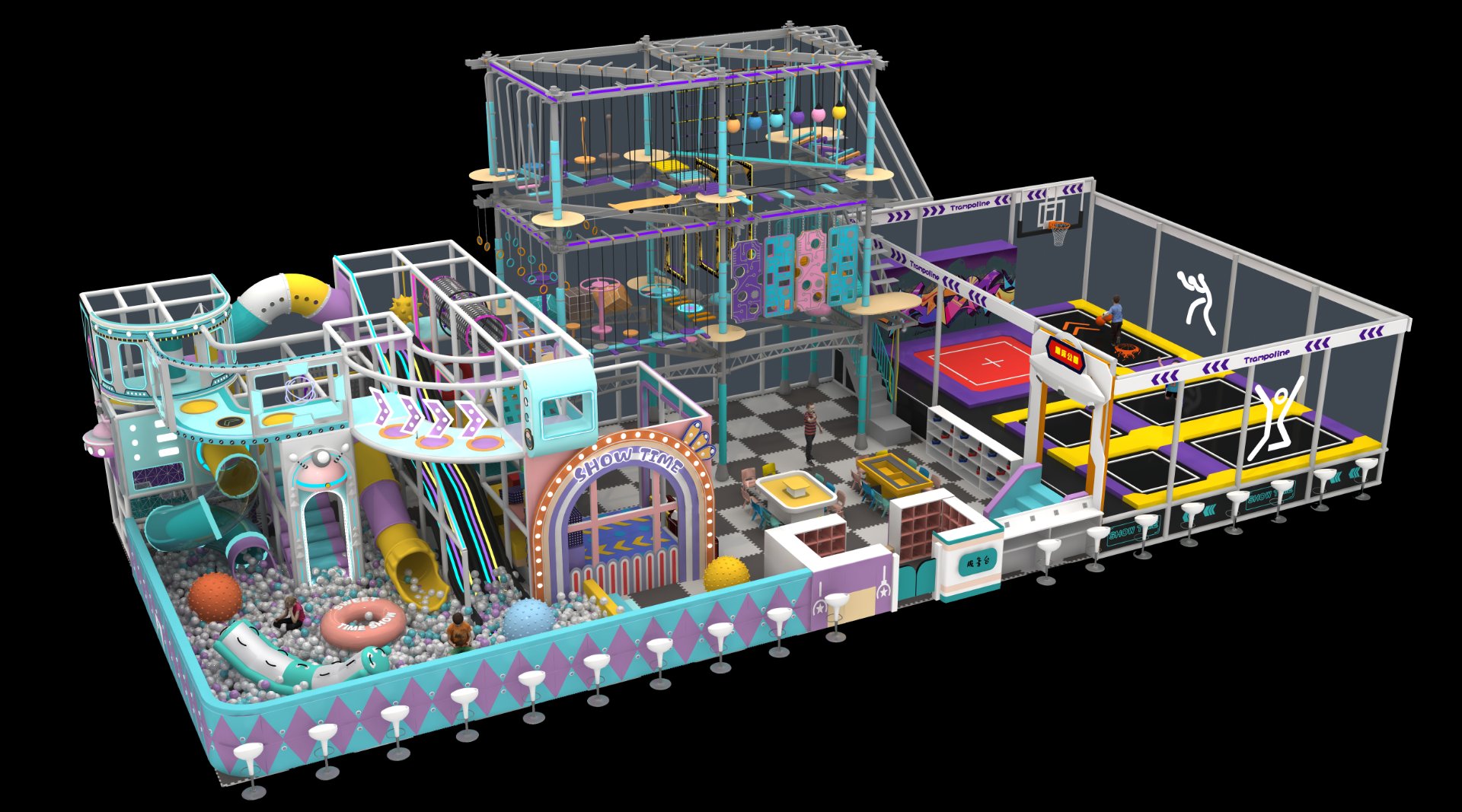
Pick at least one feature per skill; offer two difficulty levels where space allows.
Low, padded options for ages 4–6; narrower, higher beams for 7–10.
Alternate hand-foot movement builds bilateral coordination and grip.
Aim and release practice for hand-eye coordination.
Repeated jumps and landings train balance and timing together.
Swinging and rotating holds combine grip, timing and balance.
Hit-the-light games for fast hand-eye response in small spaces.


Use this map to check that a layout trains all four skills for your main age group.
| Skill | What it looks like | Ages 4–6 feature | Ages 7–10 feature |
|---|---|---|---|
| Balance | Staying steady while moving | Wide padded beam, wobble steps | Narrow beam, rope bridge |
| Hand-eye | Tracking and hitting a target | Large ball targets | Air cannons, reaction lights |
| Bilateral | Both sides working together | Crawl tunnels, low nets | Monkey bars, tall climbing nets |
| Timing | Moving at the right moment | Jumping lanes | Rotating obstacles, swinging ropes |
A planning guide, not a therapy or assessment tool. Children develop at different speeds; see CDC milestones for reference.
Best-Fit Buyers
For anyone who needs to explain or plan the developmental value of play.
Explain to parents what children gain from each area.
Use indoor play to reinforce movement skills from PE lessons.
Check a supplier layout covers more than slides and ball pools.
Plan a circuit that progresses with age.
FAQ
Active play that includes balancing, climbing, aiming and timed movement gives children repeated practice of these skills. Variety matters more than size.
Gross motor guides focus on big movements for under-5s. This map covers four specific coordination skills and ages 4–10.
Ninja obstacle sections and trampoline lanes usually combine balance and timing; climbing nets combine bilateral coordination and strength.
At least one per skill. In under 150 m², a climbing frame, a beam, a ball target and a reaction wall can cover all four.
Offer easier and harder versions side by side, or a separate under-6 section, to avoid collisions.
ASTM F1918 for soft contained play, EN 1176 in Europe and ASTM F2970 for trampoline courts.
Yes. Tell us your age groups and floor size and we prepare a free 3D layout with the four skills marked.
Safety and compliance claims on this page reference the following primary standards and regulatory publications.
Source data as of September 2026
Fill out the form below and our team will send you a custom design proposal and competitive quote within 24 hours.
Get an instant response from our team via WhatsApp. We're online 12+ hours daily.
🎯 We respond to all inquiries within 24 hours with a free 3D design concept and detailed quote — no commitment required.