1. Static and dynamic balance
Low soft beams, stepping pods and wobble bridges. Start with wide surfaces at floor level and narrow them as children progress; dynamic balance needs a moving surface.
Ages 2–5 · Skill-to-Equipment Matrix · Indoor Gross Motor Zones
Preschool movement is not one skill. Balance, climbing, jumping, crawling and object control each develop on a different timeline and need different equipment, heights and surfacing. This guide maps every gross motor skill to the indoor play pieces that train it, so a preschool, nursery or play centre buys equipment by outcome instead of by catalogue page.

Design Framework
Each skill group needs a specific type of challenge. If one is missing from the room, children practise the others twice as much and the gap shows up in assessments.
Low soft beams, stepping pods and wobble bridges. Start with wide surfaces at floor level and narrow them as children progress; dynamic balance needs a moving surface.
Foam step blocks, inclined climbing walls with large holds, cargo nets at low angles. Climbing builds grip, shoulder strength and motor planning.
Low platforms of 20–40 cm onto thick mats, plus a toddler bounce pad. Children learn two-foot take-off and controlled landing before hopping on one foot.
Tunnels, crawl-through tubes and soft ramps. Crawling remains valuable for bilateral coordination well beyond infancy.
Open running loops, hopscotch-style floor graphics and gallop lanes. These need floor space more than equipment.
Ball pits, soft throwing targets and rolling ramps. Object control is often the forgotten skill in indoor rooms built only for climbing.
Equipment Mix
These pieces form the base of a 40–120 m² gross motor zone. Quantities scale with room size and group size.
Modular foam beams, arcs and stepping pods in varied widths, covered in wipe-clean PVC for daily sanitising.
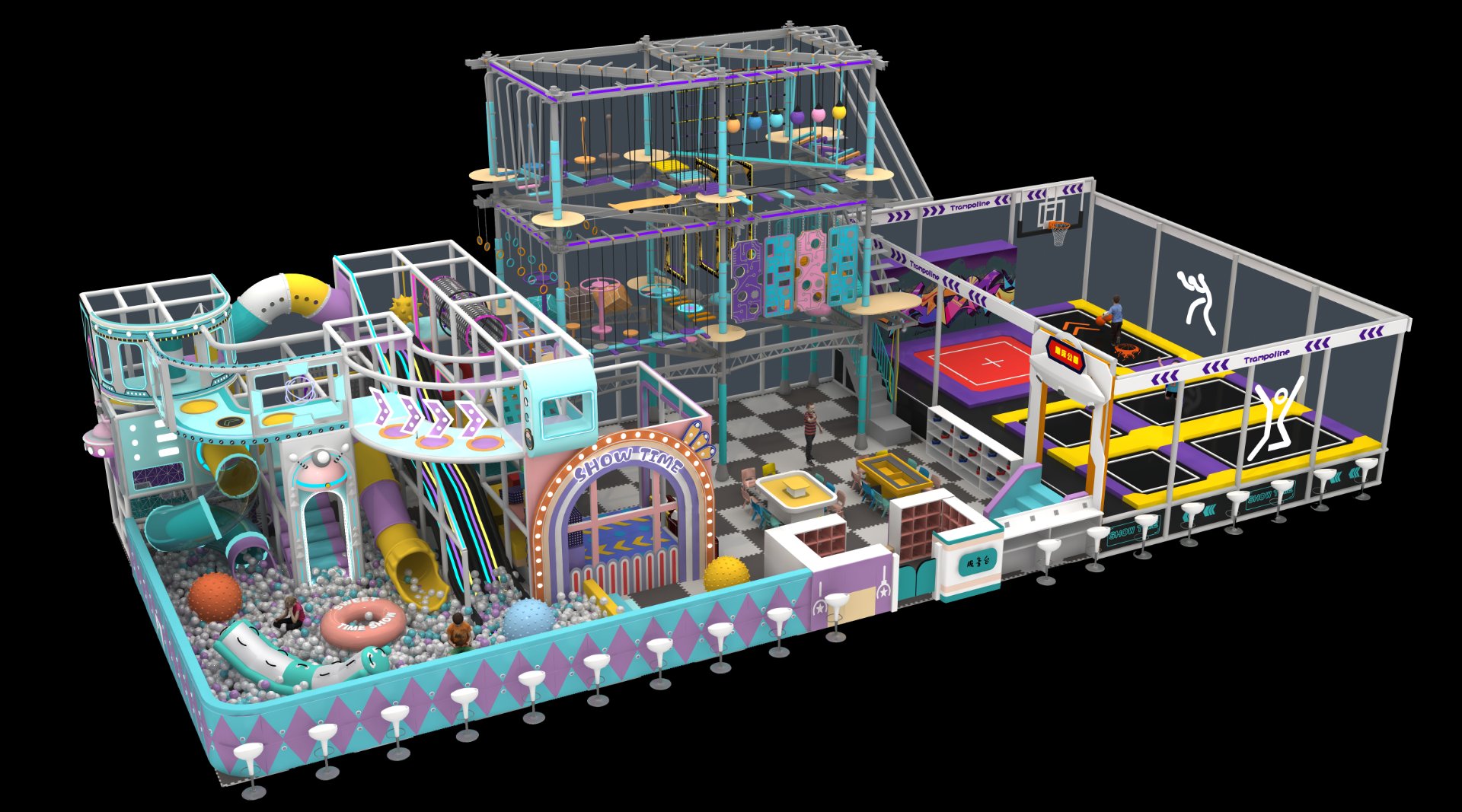
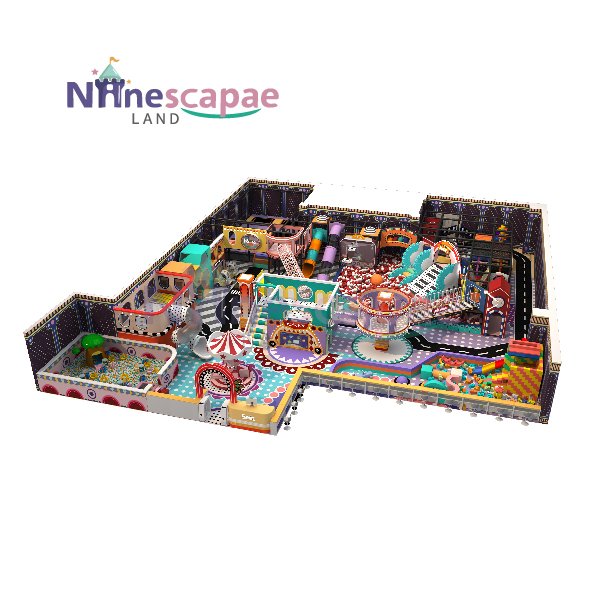
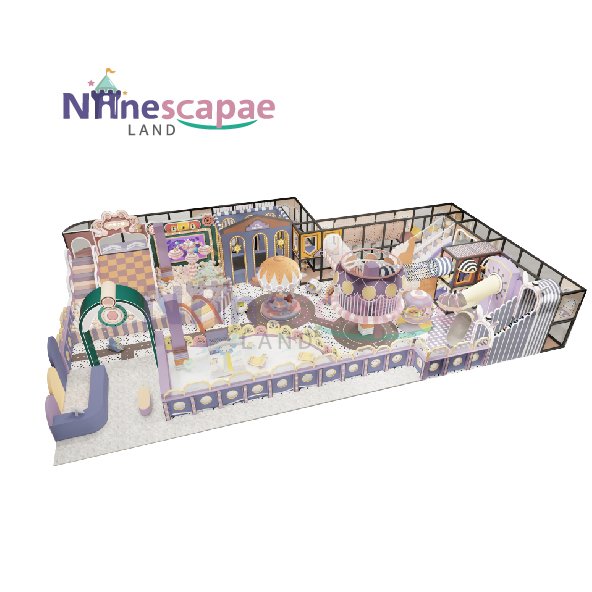
Two-level soft-contained structure with ramps, nets and a short slide, built to soft contained play requirements.
Stepped platforms with crash mats sized for each drop height; optional low-rebound toddler trampoline bed.
Tunnels with viewing windows so staff can supervise from outside the structure.
Shallow ball pit with throwing targets and roll-down channels for object-control practice.
Foam-backed flooring matched to the highest fall height in the room, with matching colours to mark activity zones.
Use this matrix to check that every skill group has at least one piece of equipment in the room.
| Skill group | Equipment | Best age | Typical height | Floor area |
|---|---|---|---|---|
| Balance | Soft beams, stepping pods, wobble bridge | 2–5 | 0–30 cm | 8–15 m² |
| Climbing | Foam steps, inclined wall, low net | 3–5 | 40–80 cm | 10–20 m² |
| Jumping | Stepped platforms, toddler bounce pad | 3–5 | 20–40 cm | 8–12 m² |
| Crawling | Tunnels, crawl tubes, soft ramps | 2–4 | 0–60 cm | 6–12 m² |
| Locomotor | Open loop, floor graphics | 2–5 | Floor | 15–30 m² |
| Object control | Ball pit, targets, roll ramps | 2–5 | 0–40 cm | 6–10 m² |
Heights and areas are planning ranges. Final values depend on the applicable standard, room size and group size.
Best-Fit Buyers
The matrix works for any operator who needs to show parents or inspectors that movement is planned, not improvised.
Replace a single climbing frame with a balanced room that covers every skill group in the curriculum.
Turn the under-5 area into a selling point for weekday parent-and-toddler sessions.
Standardise one gross motor kit across sites so outcomes and maintenance are consistent.
Use the same modular pieces for both group play and targeted movement sessions.
FAQ
Equipment that trains large-muscle movements — balance, climbing, jumping, crawling, running and throwing — rather than fine motor skills like gripping a pencil.
Public health guidance recommends children aged 3–5 be physically active throughout the day, with at least 60 minutes of moderate-to-vigorous activity for many guidelines. Indoor zones help on bad-weather days.
Most preschool gross motor pieces keep fall heights low, typically below about 0.8 m, with impact-rated surfacing matched to the highest point. Confirm against the standard for your market.
A practical range is 40–120 m², depending on group size. Open floor for running matters as much as equipment footprint.
Soft play covers balance, climbing, crawling and jumping well. Add open floor for locomotor patterns and a ball area for object control.
Yes. Foam modules use wipe-clean PVC covers and the frames are powder-coated steel, suitable for daily sanitising routines.
Yes. We provide a free 3D perspective layout that places every skill group, use zone and surfacing area before production.
Safety and compliance claims on this page reference the following primary standards and regulatory publications.
Source data as of September 2026 · 数据截至 September 2026
Fill out the form below and our team will send you a custom design proposal and competitive quote within 24 hours.
Get an instant response from our team via WhatsApp. We're online 12+ hours daily.
🎯 We respond to all inquiries within 24 hours with a free 3D design concept and detailed quote — no commitment required.