1. Build tasks that need two
Pulley lifts, ball relays and two-handle cranks only work with a partner. One child alone cannot finish the task.

Shared Tasks · Turn-Taking · Group Routes · Teacher View
Most playground equipment is built for one child at a time. Cooperative play equipment is built so that a task only works when two or more children plan, talk and take turns. This guide shows schools and early-learning centres how to choose and arrange indoor soft play that supports social skills, not just exercise.
Design Framework
Cooperation happens when the layout gives children a reason to talk, wait and help each other.
Pulley lifts, ball relays and two-handle cranks only work with a partner. One child alone cannot finish the task.
Wide platforms and look-out decks where routes join give children a place to stop, plan and invite others.
One-at-a-time slides and bridge entries with a clear waiting spot teach queuing without adult direction.
A shop, bus or kitchen corner lets children negotiate roles, a key early social skill.
Low walls and mesh panels let staff watch interaction and step in early without entering the structure.
Equipment Mix
Combine three to five stations depending on room size and age group.
Children load, lift and send balls together — communication and shared goals.
Routes wide enough to cross side by side — pacing and helping a partner.
A shared waiting deck before the slide — turn-taking and patience.
Shop, house and vehicle panels — negotiation and imaginative play.
Team scoring games — fair play and handling winning and losing.
A quiet padded corner for children who need a break from group play.
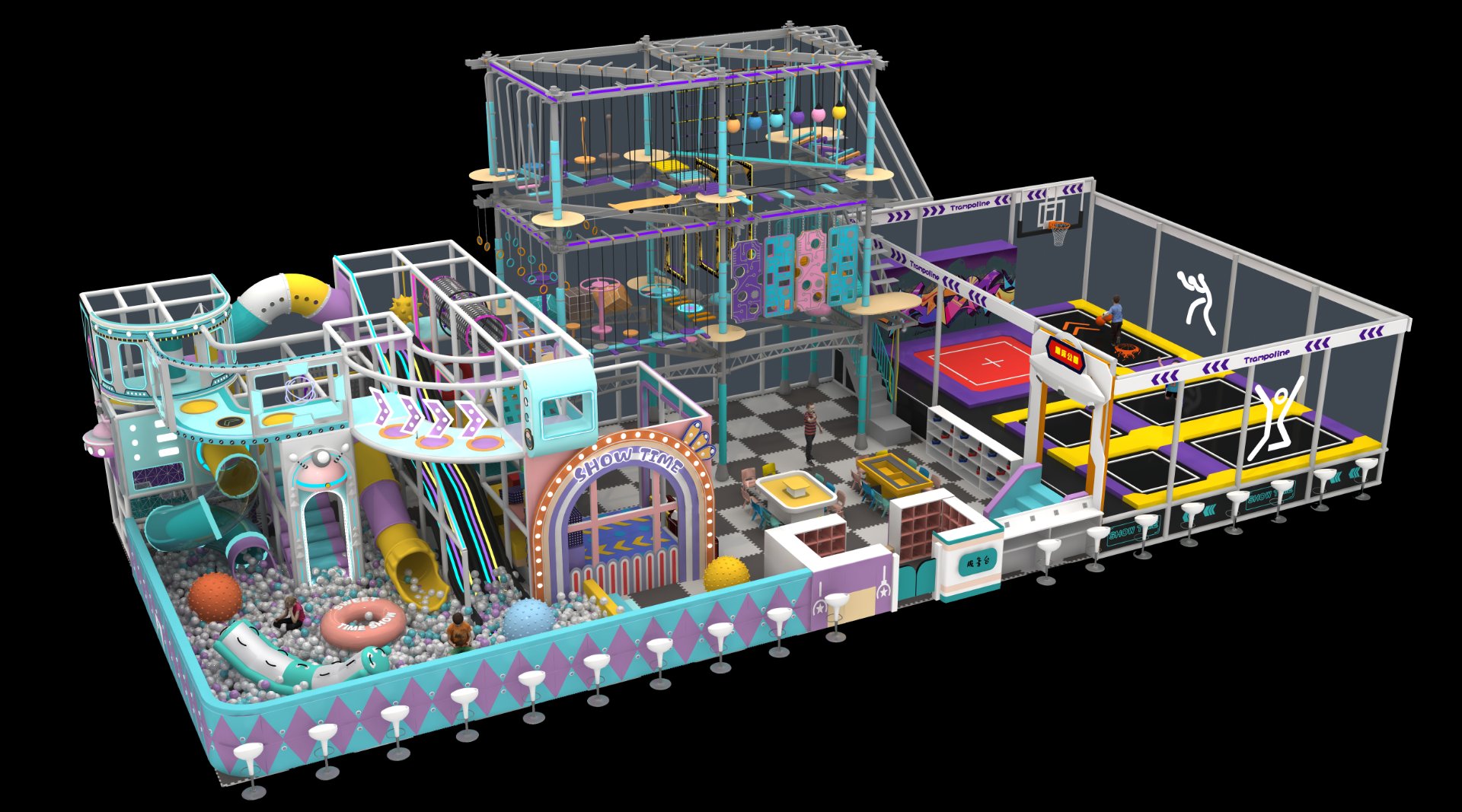
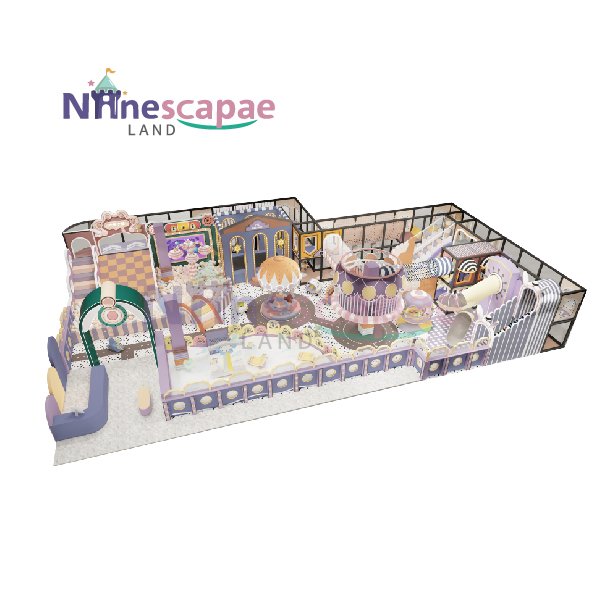
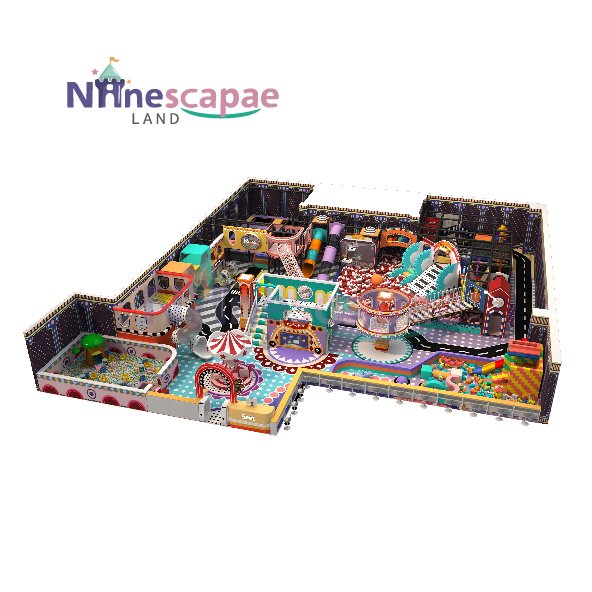
A planning guide for schools. We adjust heights and station mix to your actual age groups.
| Age group | Best stations | Group size | Main social skill | Platform height |
|---|---|---|---|---|
| 3–4 years | Role-play town, low ball pool, tunnel | 2–3 | Parallel to shared play | Low, ground level |
| 5–6 years | Ball relay, group slide, bridge | 2–4 | Turn-taking, simple rules | Low to medium |
| 7–8 years | Pulley system, team wall game | 3–5 | Planning and roles | Medium |
| 9–10 years | Team challenge route, scoring games | 4–6 | Fair play, leadership | Medium to high |
Planning ranges, not developmental assessments. Heights follow ASTM F1918 / EN 1176 limits for each age group.
Best-Fit Buyers
Education buyers who want play space to support classroom goals.
Use indoor recess space to practise the social skills taught in class.
Move children from playing side by side to playing together.
Mixed-age groups need stations that work for different sizes.
Connect play stations to the social-emotional learning framework you already use.
FAQ
Play where children share a goal and organise roles to reach it. It usually develops after parallel play, from around age 4 onward.
It includes tasks that need more than one child — pulleys, relays, shared cranks and team games — plus meeting points where children plan together.
Often yes. Ball systems, wall games and role-play panels can be fitted to many existing frames after a site check.
Three to five stations suit most rooms of 80–300 m². Small rooms can combine a ball relay with a role-play corner.
Structured shared tasks can help, especially with a calm-down nook nearby. Plan with your special-education team.
ASTM F1918 for soft contained play and EN 1176 in Europe, with fire-rated, non-toxic materials.
Yes. Send your room plan and age groups and we prepare a free 3D layout with station positions and teacher sightlines.
Safety and compliance claims on this page reference the following primary standards and regulatory publications.
Source data as of September 2026
Fill out the form below and our team will send you a custom design proposal and competitive quote within 24 hours.
Get an instant response from our team via WhatsApp. We're online 12+ hours daily.
🎯 We respond to all inquiries within 24 hours with a free 3D design concept and detailed quote — no commitment required.