1. Warm-up (5–8 min)
Locomotor movement and mobility on open floor: jogging, animal walks, dynamic stretches.
Class Templates · Coach Ratios · Zone Scheduling
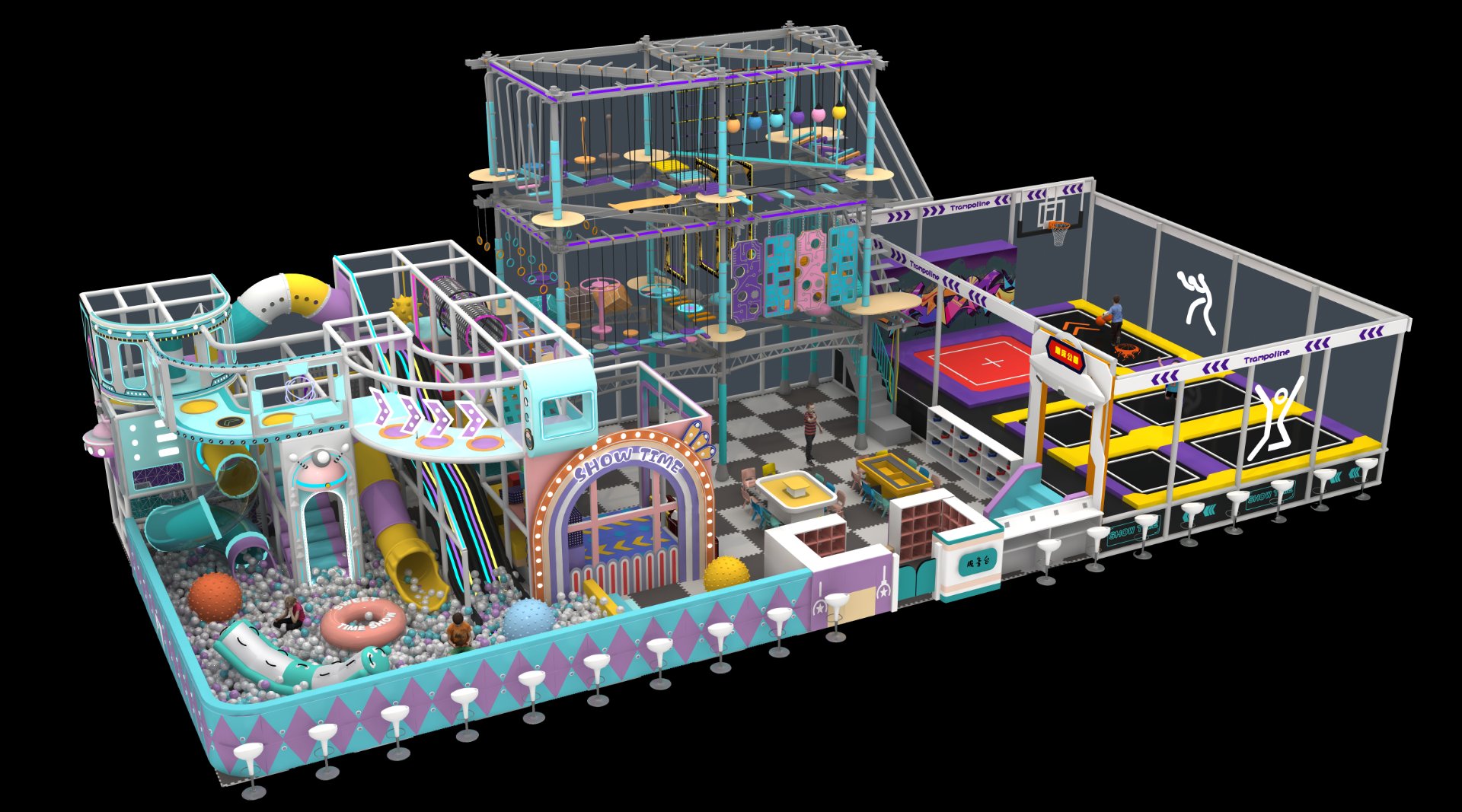
Open play brings walk-in traffic; classes bring repeat bookings. An active play curriculum turns the equipment you already have — soft play, trampoline courts and ninja lanes — into structured, age-graded movement classes. This page gives ready-to-adapt lesson templates, staffing ratios and the zoning needed to run classes alongside open play.
Design Framework
Every class, whatever the zone, follows the same four blocks so coaches can be trained once and swapped between programmes.
Locomotor movement and mobility on open floor: jogging, animal walks, dynamic stretches.
One focused skill per week — a landing technique, a ninja obstacle, a balance sequence — taught in small rotating groups.
A cooperative or competitive game that applies the skill: relays, tag variants, trampoline dodgeball.
Calm stretching, a quick skill recap and a badge or progress note for parents.
Equipment Mix
Each template runs as a 6–8 week term with one new skill per week.
Balance beams, crawl tunnels, ramps and ball pit. Weekly themes: balance, climb, crawl, jump, throw, obstacle story.
Safe stance, controlled bounce, stop, seat drop, tuck jump, partner game. Run on dedicated court beds.
Grip, swing, balance, wall run, route reading, timed course. Reconfigure modules every term.
Rotate groups across all three zones for a full-venue class, ideal for school trips and homeschool groups.
Block one court or lane per class with soft barriers so open play continues safely in the rest of the venue.
Cones, markers, soft balls, timers and progress cards stored next to each zone.


Use this comparison to choose which programmes to launch first.
| Programme | Ages | Coach ratio | Space per class | Core equipment |
|---|---|---|---|---|
| Little Movers | 2–4 | 1:6 + parents | 40–60 m² | Soft play modules |
| Bounce Basics | 5–9 | 1:8 | 4–6 beds | Trampoline court |
| Obstacle Academy | 6–12 | 1:10 | 1 ninja lane | Ninja modules |
| Active Explorers | 5–12 | 1:10 | Whole venue rotation | All zones |
Ratios are planning examples. Follow local supervision rules, insurer requirements and the applicable equipment standards.
Best-Fit Buyers
Classes suit operators who want predictable weekly revenue on top of open play and parties.
Launch toddler and kids classes in quiet hours to raise weekday utilisation.
Add skill-based programmes that build loyalty beyond open jump sessions.
Pair academic sessions with movement classes in the same building.
Design zones with class barriers, coach storage and parent viewing from day one.
FAQ
A structured series of movement classes, organised by age and skill, that runs on a play centre's equipment instead of relying on open play only.
About 45 minutes for most ages, split into warm-up, skill block, game and cool-down. Toddler classes are often 30–40 minutes.
Yes, if one zone — a court, lane or soft play area — is blocked off with barriers and has its own coach.
Planning examples are about 1:6 for toddlers with parents present, 1:8 on trampolines and 1:10 for ninja classes, subject to local rules and insurance.
Usually the one using your most under-used zone in quiet hours — often a toddler soft play class on weekday mornings.
Mostly no. Modular ninja obstacles and soft play pieces that can be reconfigured each term keep classes fresh.
Yes. Our free 3D layout includes class zones, barriers, coach storage and parent viewing areas.
Safety and compliance claims on this page reference the following primary standards and regulatory publications.
Source data as of September 2026 · 数据截至 September 2026
Fill out the form below and our team will send you a custom design proposal and competitive quote within 24 hours.
Get an instant response from our team via WhatsApp. We're online 12+ hours daily.
🎯 We respond to all inquiries within 24 hours with a free 3D design concept and detailed quote — no commitment required.