
Set heights to 2–5 year old reach
Platforms at 300–600 mm, handholds at 550 mm, free-standing play elements capped at 900 mm so a teacher can lift a child down without a ladder.

Ages 2–5 · Classroom-Adjacent Layouts · Ratio-Friendly Sightlines
Custom soft play built to preschool operating reality: 2–5 year old reach heights, one-adult-per-eight-children sightlines, 45-minute rotation blocks and equipment that folds back against the wall when the room becomes a classroom again.
Design Framework
A preschool play area is used in timetabled blocks by staff who are also counting heads, and the same room often reverts to circle time an hour later. That changes almost every specification decision compared with a commercial play hall.
Platforms at 300–600 mm, handholds at 550 mm, free-standing play elements capped at 900 mm so a teacher can lift a child down without a ladder.
No enclosed tunnels above 600 mm, no opaque upper decks. One adult standing at the room entrance must see every child from a single position.
Four to five activity stations so a group of 16–24 children cycles through without queueing, and staff can call a station change without moving equipment.
Modular soft blocks, castor-mounted arches and wall-hinged mats so the play zone folds to a 600 mm deep wall footprint when the room becomes a classroom.
Equipment Mix
All modules use CMHR foam cores with wipe-clean welded PVC skins, specified to the same cleaning chemistry preschools already use for tabletops and floors.
Wedges, arches, cylinders and steps in a 300 mm module grid so staff reconfigure the course weekly without tools or drawings.
600 mm deck with a two-step climb and a 1.1 m wide slide — the largest gross-motor challenge that still fits a 2–5 age band unsupervised at close range.
Wall-mounted texture, gear, latch and mirror boards at 500–800 mm, chosen so a station works with two children at a time.
Ground-level beams, stepping domes and a soft bridge for the vestibular practice that most preschool curriculums require weekly.
Soft shop counters, cars, boats and kitchen forms that double as circle-time seating when the play block ends.
Wall-hinged and tri-fold impact mats with edge ramps, so the floor build-up meets fall-height requirements only while the equipment is deployed.
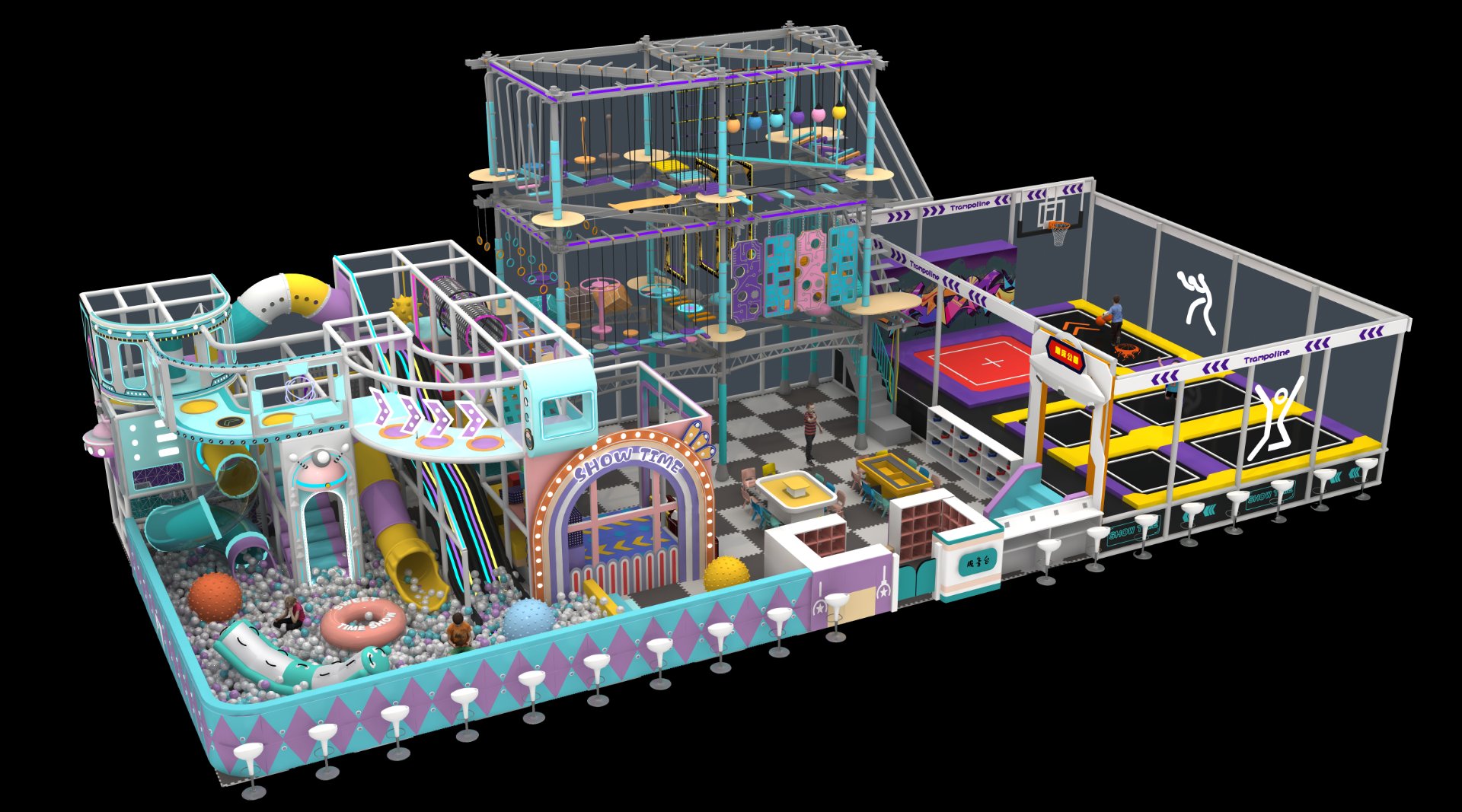
Typical module count and group size by available floor area, based on 45-minute rotation blocks.
| Room area | Activity stations | Children per block | Indicative package (USD) |
|---|---|---|---|
| 30–50 sqm | 3 stations | 12–16 | $4,000 – $9,000 |
| 50–80 sqm | 4 stations | 16–24 | $9,000 – $18,000 |
| 80–120 sqm | 5–6 stations | 24–32 | $18,000 – $32,000 |
| 120+ sqm | 6–8 stations + role play | 32–48 | $32,000 – $60,000 |
Ranges cover soft play modules, wall panels and impact matting; site-specific flooring build-up and freight are quoted separately.
Best-Fit Buyers
Preschool procurement is usually a single room, a fixed grant budget and a hard installation window during holidays — the projects below are quoted that way.
Single-site settings converting one room into a timetabled indoor gross-motor space.
Multi-site groups needing a repeatable module list that installs identically across rooms of different sizes.
Early-years wings that must match the school's existing safety documentation and inspection paperwork.
Shared halls where equipment has to be stored away between sessions.
FAQ
Free-standing play elements for 2–5 year olds are normally capped at 900 mm, with decks at 300–600 mm and any enclosed element kept under 600 mm so staff can reach in. Above those heights the equipment moves into a supervised commercial play-hall specification with a deeper impact-attenuating floor build-up.
A workable three-station rotation fits in 30–50 sqm for 12–16 children. Below 30 sqm we specify wall-mounted panels plus a foldaway mat set rather than a structure, so the room still functions as a classroom.
Yes. Modular blocks stack, arches sit on lockable castors and matting is tri-fold or wall-hinged. A trained pair of staff clears a four-station layout to a 600 mm deep wall footprint in about ten minutes.
Neutral detergent and standard quaternary-ammonium wipes are safe on the welded PVC skins. Solvent, bleach above 1,000 ppm and alcohol gels degrade the welds — we supply a chemical compatibility sheet with every package.
Standard modules ship in 15–20 days; fully custom themed rooms run 25–35 days plus freight. Most preschools schedule production so installation falls inside a holiday week, which we hold as a fixed date in the contract.
Safety and compliance claims on this page reference the following primary standards and regulatory publications.
Dados das fontes em setembro de 2026
Fill out the form below and our team will send you a custom design proposal and competitive quote within 24 hours.
Get an instant response from our team via WhatsApp. We're online 12+ hours daily.
🎯 We respond to all inquiries within 24 hours with a free 3D design concept and detailed quote — no commitment required.