1. Define the skill map
Group obstacles under grip, hang, traverse, balance, jump, crawl and landing. Avoid several attractions testing the same skill while leaving another skill absent.
Skill Progressions · Class Rotation · Teacher Visibility
A curriculum-led approach to indoor ninja equipment: turn obstacles into repeatable skill stations with beginner-to-advanced progressions, class-sized rotations, clear staff positions and simple achievement records.
Design Framework
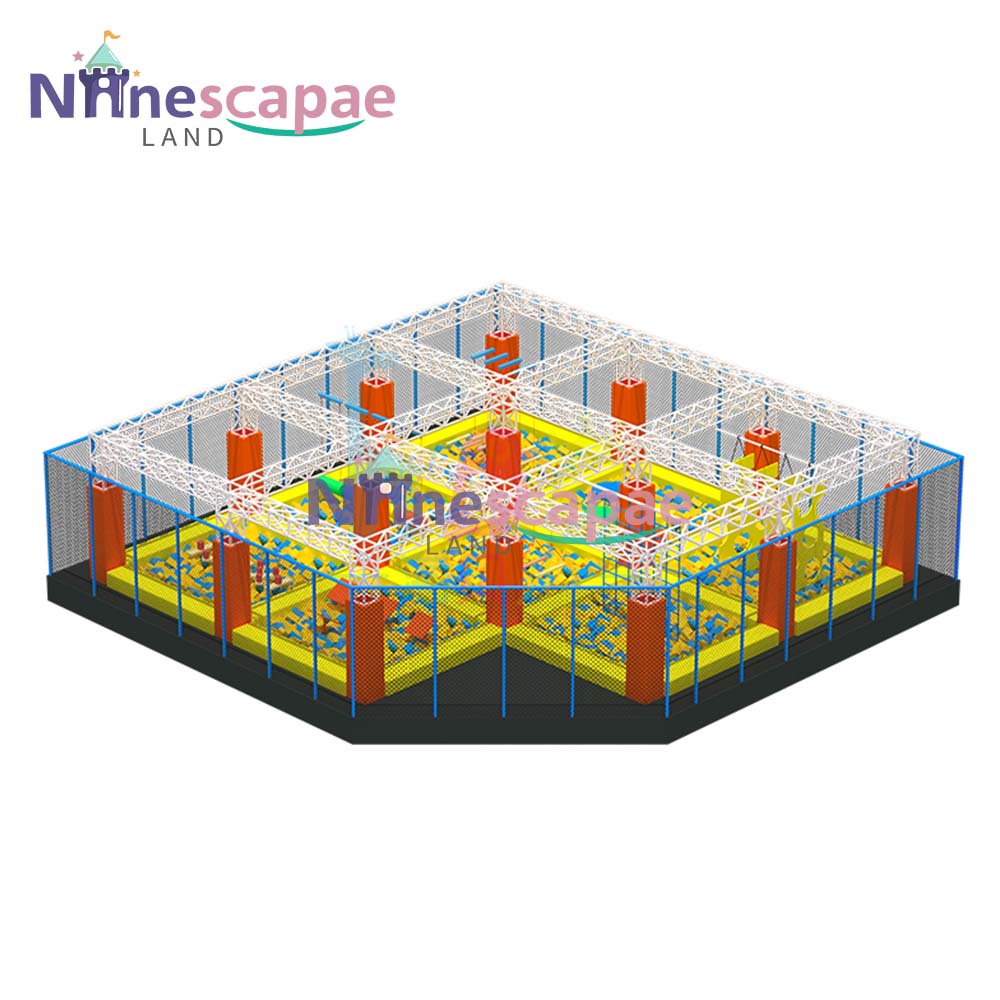
Education centers need more than a dramatic obstacle. Each station should teach a named movement skill, offer a clear progression and fit a repeatable lesson structure.
Group obstacles under grip, hang, traverse, balance, jump, crawl and landing. Avoid several attractions testing the same skill while leaving another skill absent.
Give each core skill an entry task, a developing task and a challenge task. Students can train together while working at an appropriate level.
Set station capacity, attempt time, bypass route and waiting position so a class rotates without long queues or students crossing active landing zones.
Track controlled completion, technique or consistency rather than only fastest time. This gives educators evidence of progress without turning every session into a race.
Equipment Mix
The mix balances upper-body, lower-body and planning tasks while keeping transitions visible and teachable.
Low rings, bars or holds with adjustable reach distances and a clearly marked controlled dismount.
Horizontal movement across nets, holds or suspended steps with three route choices and a bypass.
Ground-level beam, wobble element and separated stepping route progressing from stable to dynamic.
Marked take-off and landing targets that prioritize controlled landing before distance or speed.
Tunnels and low obstacles that develop body awareness without hidden supervision areas.
A short final sequence combining learned skills; time is optional and never replaces technique criteria.

| Skill | Entry task | Developing task | Challenge task |
|---|---|---|---|
| Grip | Supported bar hold | Ring transfer | Variable hold traverse |
| Balance | Wide ground beam | Wobble beam | Separated moving steps |
| Traverse | Low net route | Angled holds | Suspended route |
| Jump / land | Two-foot target | Direction change | Linked targets |
| Planning | Single sequence | Choice of two routes | Timed mixed sequence |
Final obstacle dimensions, fall protection and supervision rules must match user age, ability and the applicable local standard.
Best-Fit Buyers
This format suits providers that teach recurring groups and need visible development across a term.
Add a structured movement course that can be scheduled alongside tutoring or enrichment programs.
Use skill stations for class rotation, assessment and mixed-ability participation.
Run repeatable achievement levels that give returning students a clear next challenge.
Extend grip, balance and movement-planning programs with a modular obstacle lane.
FAQ
It is organized around named skills, graded progressions, class rotation and observable outcomes. Spectacle and speed are secondary to repeatable teaching and controlled participation.
A balanced course can support grip, hanging, traversing, balance, jumping, controlled landing, crawling, bilateral coordination and movement planning.
Place entry, developing and challenge versions of the same skill side by side, provide a bypass, and assess control or consistency rather than requiring every student to complete the hardest route.
Define each station's active capacity, attempt time, waiting point and next movement. Separate waiting students from landings and avoid routes that cross each other.
Yes. Send the floor plan, ceiling heights, columns, user ages, class size and lesson length. We can prepare a 3D concept with station capacity, circulation and progressions marked for review.
Safety and compliance claims on this page reference the following primary standards and regulatory publications.
Fill out the form below and our team will send you a custom design proposal and competitive quote within 24 hours.
Get an instant response from our team via WhatsApp. We're online 12+ hours daily.
🎯 We respond to all inquiries within 24 hours with a free 3D design concept and detailed quote — no commitment required.