
Give real challenge inside safe limits
Six-year-olds need effort, height and speed. Design to a 1.8–2.0 m critical fall height with matched attenuating surfacing rather than capping structures at toddler heights they will simply climb outside of.
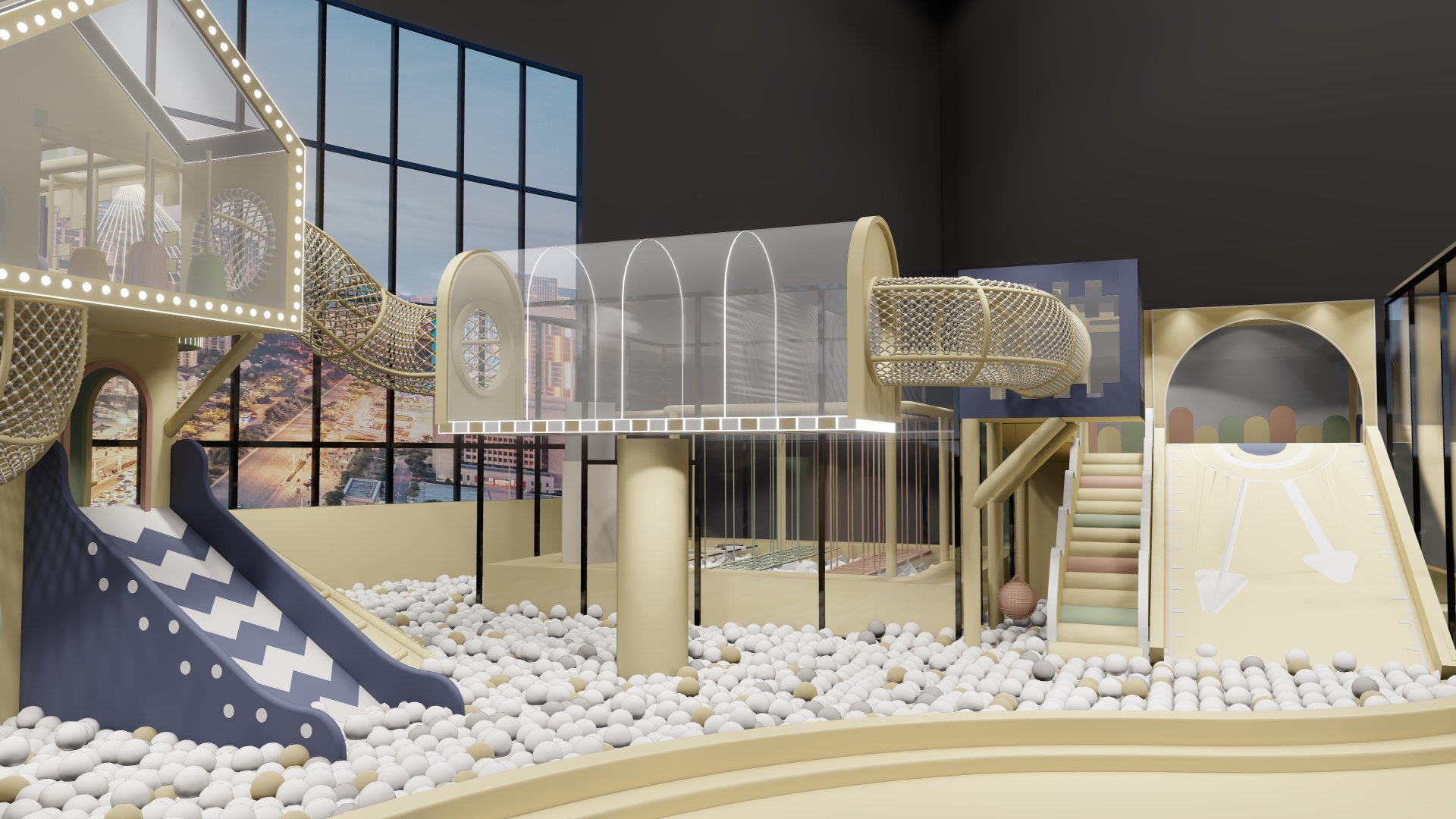
Ages 5–8 · Party Group Layouts · Real Challenge, Controlled Risk
Six-year-olds outgrow toddler soft play but are too small for teen adventure rigs. This is how to specify a 5–8 age zone with genuine challenge, party-group circulation for 10–20 children and the fall heights, gaps and sightlines that keep it safe.
Design Framework
Toddler zones bore a six-year-old within ten minutes, and teen rigs are physically unsafe for them. A dedicated 5–8 zone keeps the family visit longer and is the single zone that converts birthday party enquiries.
Six-year-olds need effort, height and speed. Design to a 1.8–2.0 m critical fall height with matched attenuating surfacing rather than capping structures at toddler heights they will simply climb outside of.
Physical separation — not a painted line — between the 5–8 zone and the toddler area. Mixed running speeds in one space are the most common cause of collision incidents.
A party of 10–20 arrives together and moves as a pack. One-way loops, a wide entry funnel and 1.5 m aisles stop the pile-ups that generate complaints and injuries.
Head entrapment gaps outside the 89–230 mm band, no protrusions or entanglement points at deck level, guarded platform edges, and clear run-off space at every slide exit.
Equipment Mix
Every element below is built to a documented fall height and paired with the correct surfacing build-up, so the challenge level rises without the risk profile rising with it.
Two to three decks with net climbs, rope tunnels and a rotating challenge route — enough vertical travel to feel earned at age six.
Hanging steps, wobble beams and a warped wall at 5–8 scale, with a timer display. Competition is what makes this age band repeat the activity.
Twin or triple lanes so a party group races side by side rather than queueing single file at one drop slide.
Projection or sensor-based ball games with scoring — the format that reliably occupies a mixed-gender party group of this age for 20+ minutes.
A 6–12 bed court sized for 5–8 body weights with perimeter padding and one-jumper-per-bed marking.
A separated room with a table plan for 20, plus a holding area at the zone entrance so groups are briefed before entering.
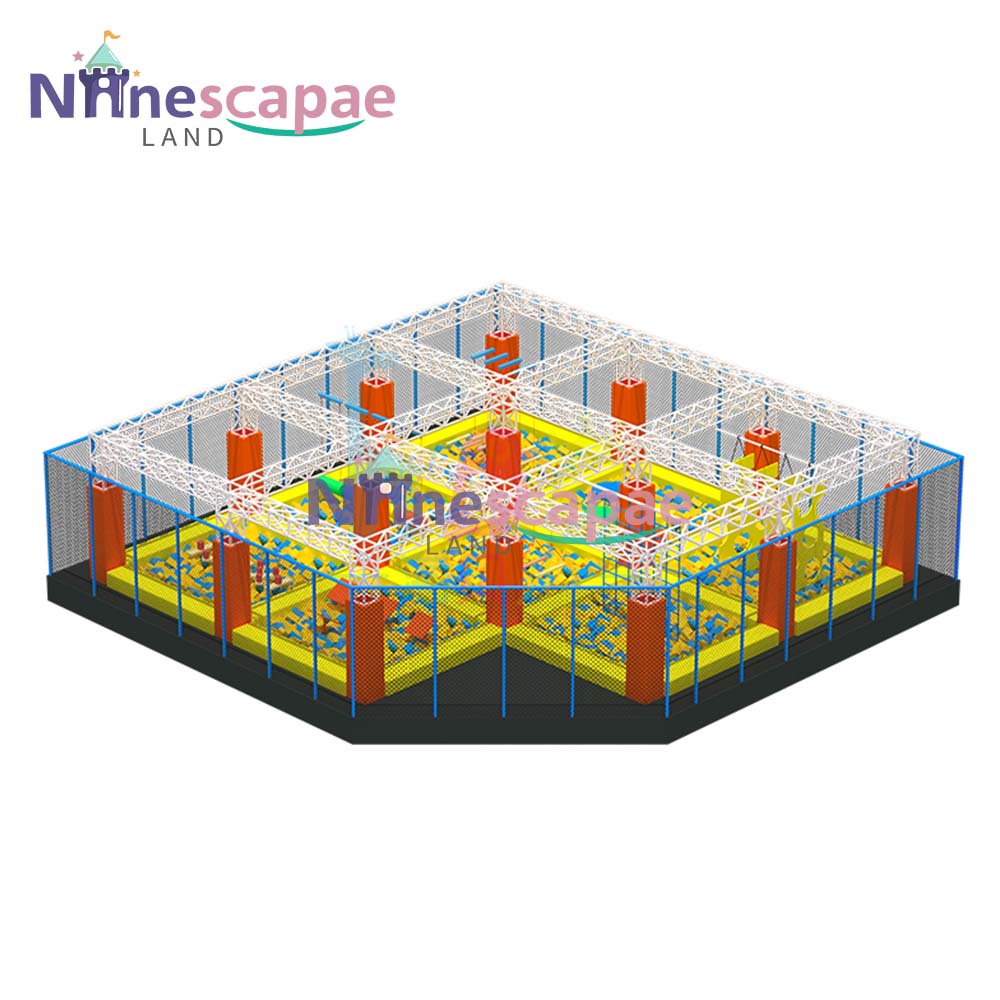
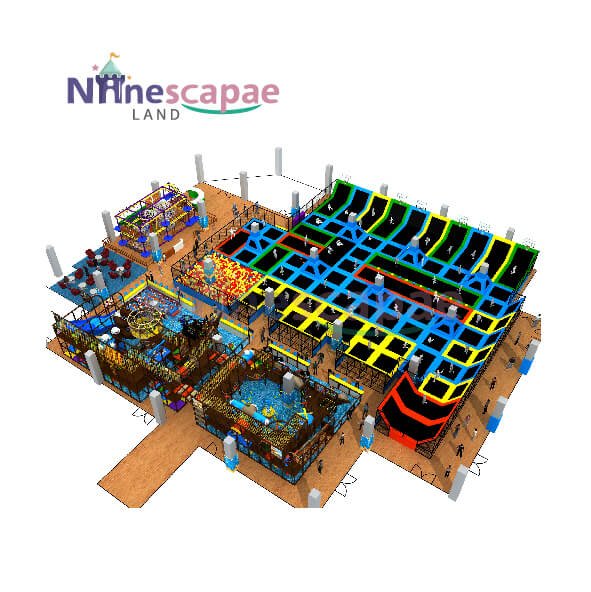
Why a 6-year-old needs a different zone from a toddler and from a teenager.
| Age band | Design fall height | Core activities | Area per child |
|---|---|---|---|
| 1–3 years | ≤ 1.0 m | Soft blocks, low slide, ball pool | 2.5–3 sqm |
| 3–5 years | ≤ 1.5 m | Low climber, tunnels, role play | 3–3.5 sqm |
| 5–8 years | 1.8–2.0 m | Multi-level climber, ninja run, racing slides, ball court | 3.5–4.5 sqm |
| 9–14 years | 2.0–3.0 m | Trampoline court, high ropes, drop slide | 4.5–6 sqm |
Fall heights are design targets matched to an attenuating surfacing build-up tested to ASTM F1292 or EN 1177; verify the tested build-up, not just the mat thickness.
Best-Fit Buyers
This zone is usually specified either to fix a booking problem or to extend dwell time for families with more than one child.
Venues losing birthday bookings to competitors because the offer stops at toddler soft play.
FECs with arcade and teen attractions that lack a physical activity zone for primary-age children.
Settings covering Key Stage 1 / grades K–3 who need indoor active provision in wet weather.
Family destinations where the 5–8 band is the age most likely to be visiting with younger siblings.
FAQ
At age six children handle multi-level climbing frames, ninja and obstacle runs, wide racing slides, interactive ball courts and small trampoline beds. The safety limit is not the activity type but the fall height and the surfacing under it: design to 1.8–2.0 m critical fall height with a tested attenuating build-up, keep gaps outside the 89–230 mm entrapment band, and separate the zone from under-3s.
Allow 3.5–4.5 sqm of net play area per child. A zone hosting two 15-child parties at once therefore needs roughly 110–135 sqm of play area plus circulation, party room and staging space.
Not safely in the same space. Running speed and body mass differ too much, and collisions are the leading incident type in mixed zones. Use a physical barrier and separate entries; a shared viewing and seating area between the two zones keeps supervision practical for parents with both ages.
Venues commonly staff one host per 10–15 children for this age band, with parents retained as responsible adults. The layout matters as much as the ratio: one-way loops and open sightlines let a single host see the whole group from the staging point.
Competitive group formats — timed ninja runs, racing slides and scored ball games — hold a 10–20 child group longest because everyone plays at once instead of queueing. Plan a 90-minute booking as 50 minutes active play, 30 minutes party room, 10 minutes free play.
Safety and compliance claims on this page reference the following primary standards and regulatory publications.
Données des sources au septembre 2026
Fill out the form below and our team will send you a custom design proposal and competitive quote within 24 hours.
Get an instant response from our team via WhatsApp. We're online 12+ hours daily.
🎯 We respond to all inquiries within 24 hours with a free 3D design concept and detailed quote — no commitment required.