
Set a movement rule per module
Every module must be moved by two adults without lifting equipment: castors with brakes, sled bases on smooth flooring, or handle points at hip height. Write the crew size and move time into the purchase specification.
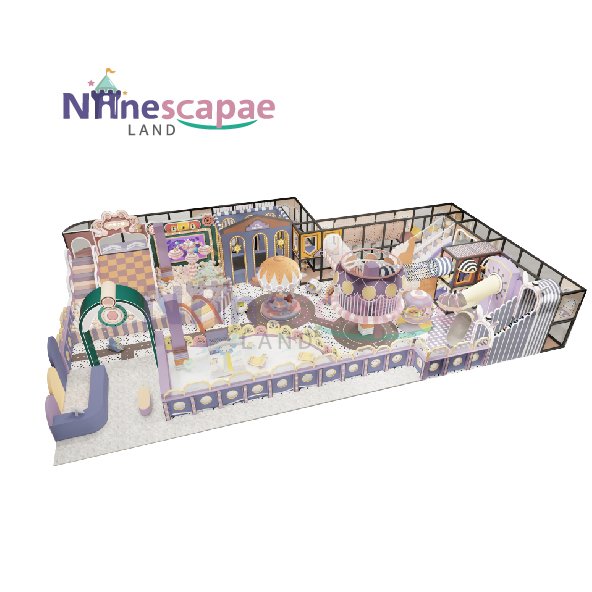
Rotation Strategy · Interlocking Modules · Multi-Use Rooms
Fixed play structures lose engagement after about six weeks and lock a room into one use. Modular, reconfigurable equipment lets a team rotate the layout each term and clear the floor when the room becomes something else.
Design Framework
Reconfigurability is a specification, not a marketing word. If a module cannot be moved by two staff, stored inside the room and reconnected without tools, the layout will never actually be rotated.
Every module must be moved by two adults without lifting equipment: castors with brakes, sled bases on smooth flooring, or handle points at hip height. Write the crew size and move time into the purchase specification.
One interlocking system across the set — matched heights, common deck pitch, tool-free couplers — so any module can join any other. Mixed proprietary systems are what freeze a layout in place.
Nesting and stacking only help if the wall band exists. Allocate 8–12% of floor area for stored modules and confirm stack heights against the ceiling and sprinkler plane.
Three or four documented layout variants, each with a plan drawing and a fall-height note, rotated per term. Documented variants keep the change compliant instead of improvised.
Each configuration needs its own fall-height and clearance check. Modules with fixed platform heights and pre-verified combinations make that a five-minute confirmation rather than a re-survey.
Equipment Mix
Each module is specified for repeated repositioning: sealed bases, protected edges and connection points that survive being coupled and uncoupled every term.
Blocks, ramps, arches and steps on a common grid — the fastest way to change difficulty without touching the structure.
Compact frames with braked castors and low centre of mass, repositioned by two staff and locked for use.
Platforms at matched deck heights with slides that unclip and nest against the wall for clear-down.
Beams, pods and hanging elements on freestanding frames that rebuild as a different course each rotation.
Double-duty trolleys that hold rotation stock and act as half-open sightline dividers when deployed.
Activity panels that fold flat so the room can serve as a hall, classroom or event space within the hour.

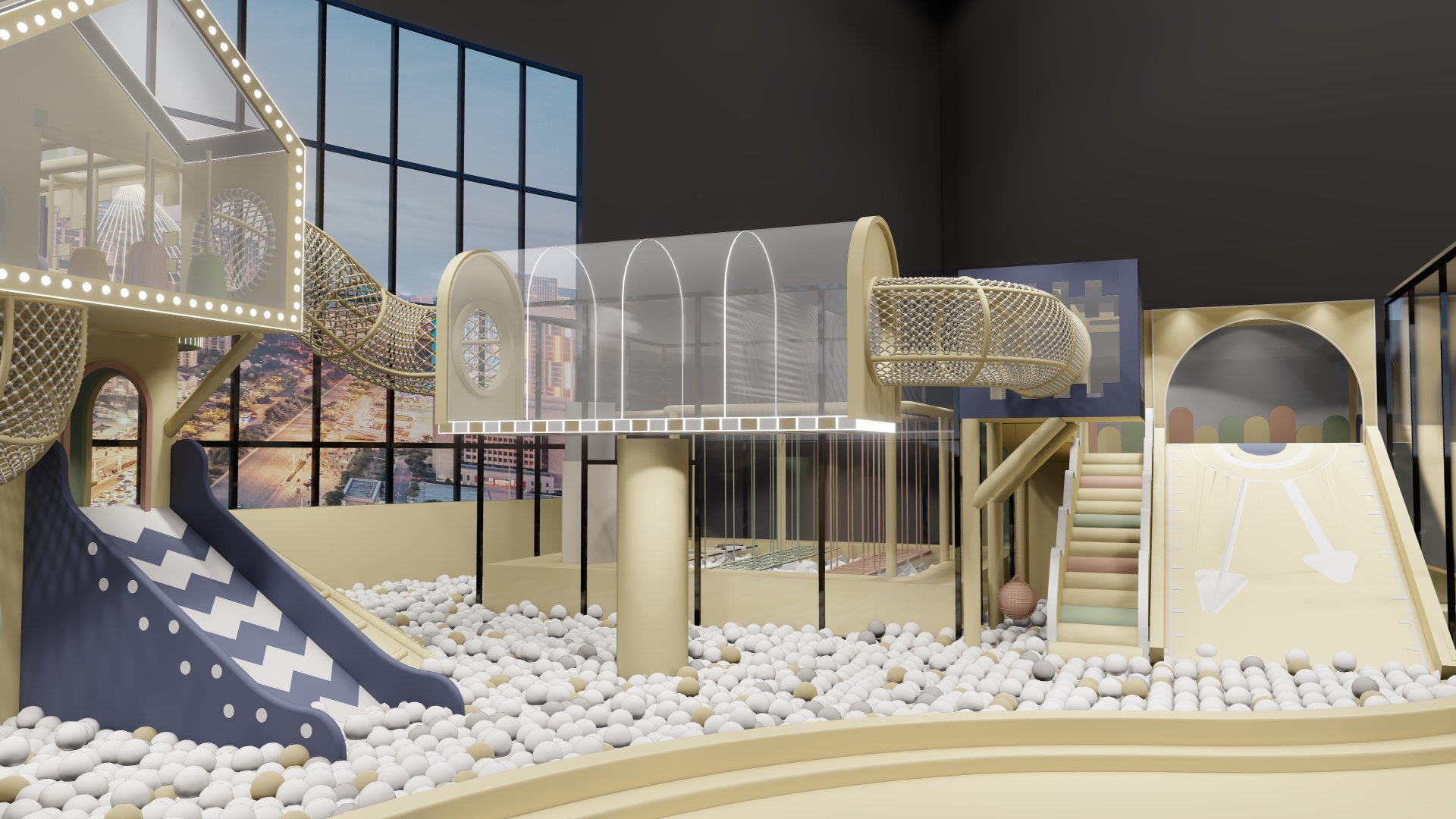
What changes when a layout can be rotated rather than built once.
| Criterion | Fixed structure | Modular set |
|---|---|---|
| Layout change | Capital project | Two staff, under 60 minutes |
| Engagement over time | Declines after ~6 weeks | Restored each rotation |
| Room availability | Play only | Play, class, hall, event |
| Storage need | None | 8–12% of floor area |
| Inspection | One configuration | One check per documented variant |
| Cost per play hour | Lower if room is play-only | Lower where the room has two jobs |
Each documented variant needs its own fall-height and clearance confirmation; pre-verified module combinations keep that a five-minute check rather than a re-survey.
Best-Fit Buyers
Modular equipment is specified wherever the room has more than one job, or the same children return weekly and boredom is the real risk.
Spaces that must return to assembly, dining or PE use between play sessions.
Settings with the same cohort every day, where term rotation sustains engagement without new spend.
Shared premises with limited storage where equipment has to clear the floor for other user groups.
Mall activations and holiday programmes that install, run and strike a play space repeatedly.
FAQ
Equipment built as separate units on a common connection grid — interlocking soft forms, castor-mounted frames, nesting platforms and folding panels — so the layout can be rebuilt as several different configurations instead of one permanent structure.
Once per term is the practical rhythm. Engagement on a fixed layout typically declines after about six weeks, and rotating one or two modules restores it without new capital spend. Prepare three or four documented variants so staff are not improvising.
Allocate 8–12% of floor area as a wall-side storage band, and confirm stack heights against the ceiling and sprinkler plane. Nesting and stacking only help if that volume was reserved at design stage.
Yes, provided each configuration is checked. Every variant needs its own fall-height and clearance confirmation; specifying fixed platform heights and pre-verified module combinations turns that into a short confirmation instead of a fresh survey.
That is the design target — a full clear-down by two staff in under an hour. It depends on castors with brakes or sled bases, tool-free couplers, folding wall panels and rolling storage units being specified from the start.
Safety and compliance claims on this page reference the following primary standards and regulatory publications.
بيانات المصادر حتى سبتمبر 2026
Fill out the form below and our team will send you a custom design proposal and competitive quote within 24 hours.
Get an instant response from our team via WhatsApp. We're online 12+ hours daily.
🎯 We respond to all inquiries within 24 hours with a free 3D design concept and detailed quote — no commitment required.