
Start from the session clock
Split a 90-minute session into arrival, three activity rotations and pack-down. Each zone needs to occupy a group of 8–15 for 15–20 minutes without staff running the game — otherwise one adult is trapped in one corner.
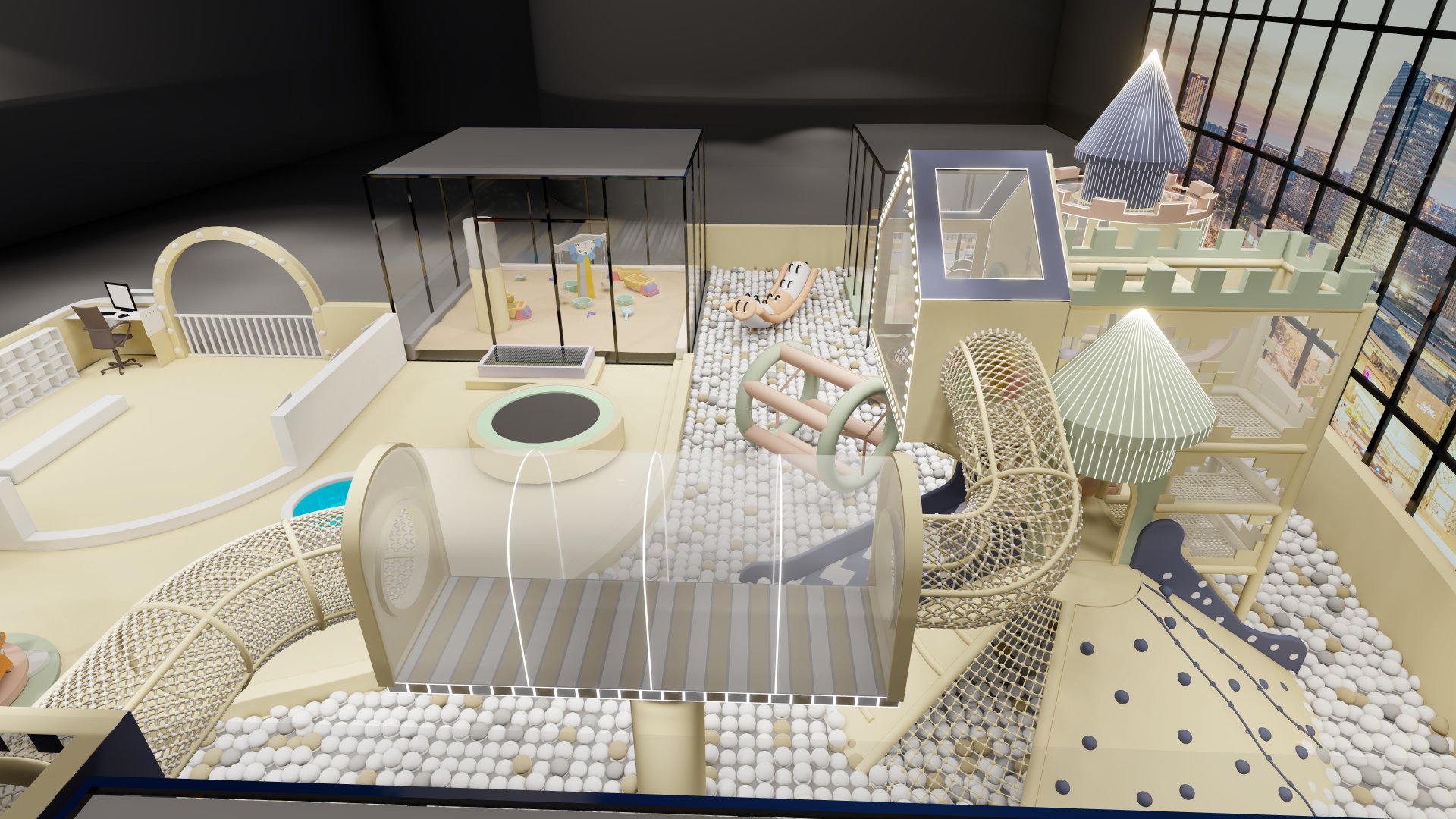
90-Minute Sessions · Mixed Ages · Two Staff on the Floor
After-school programmes run on a fixed clock with small teams and wide age ranges. This guide specifies indoor play equipment around session length, rotation, staff sightlines and shared-hall pack-down instead of around a single big structure.
Design Framework
An after-school programme is a scheduling problem. Children arrive together, leave together, and are supervised by two or three staff. Equipment either supports rotation and sightlines or it creates queues and blind corners.
Split a 90-minute session into arrival, three activity rotations and pack-down. Each zone needs to occupy a group of 8–15 for 15–20 minutes without staff running the game — otherwise one adult is trapped in one corner.
Put high-output equipment (obstacle runs, ball games, trampoline bays) on one side and low-arousal equipment (climbing traverse, building blocks, quiet nook) on the other, so a group can be moved down in energy before homework or pickup.
Every play position should be visible from at least two standing points. Avoid enclosed tubes and solid-panel houses; use mesh, open frames and low walls so two staff can cover a hall of 40 children.
A 5-year-old and an 11-year-old cannot share the same fall height or the same challenge level. Split by difficulty tier with separate entries, so older children are not queueing behind toddlers on the same ladder.
Most programmes borrow a gym, hall or cafeteria. Specify wheeled bases, stackable soft-play, roll-out mats and a labelled trolley store so two staff can clear the floor in under 15 minutes.
Timed obstacle runs, scored target walls and relay circuits give leaders a score to report and children a reason to repeat — this is what converts free play into a programme parents can see.
Equipment Mix
Each format below is chosen for a 15–20 minute rotation with one adult present and a mixed age group.
A ninja-style low course with start and finish gates. Handles 8–12 children in a queue-free loop and produces a time that can be posted on a board each week.
Throwing targets plus relay lanes. High throughput, no instruction required, and the score gives staff a natural way to split teams.
A low traverse under 1.5 m fall height with an easy and a hard route line, so 5-year-olds and 11-year-olds use the same wall without conflict.
Wheeled and stackable blocks, wedges and tunnels for the youngest cohort. Clears to a trolley store when the hall reverts to its main use.
Marked mats for balance, tag and cooperative games. The cheapest way to make an empty hall floor programmable and to protect a sports surface.
Enclosed but sightline-open cushioned space for one to three children, used before homework blocks and for children who need to step out of a loud rotation.
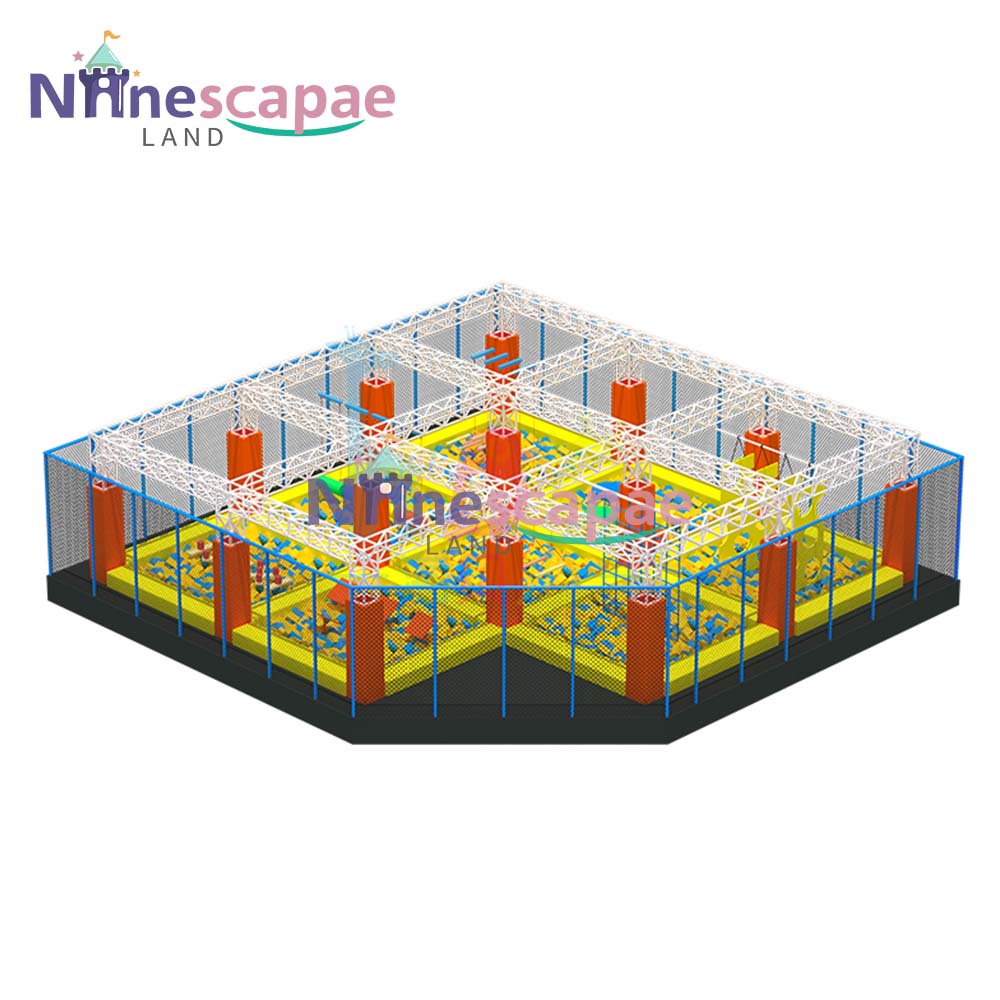
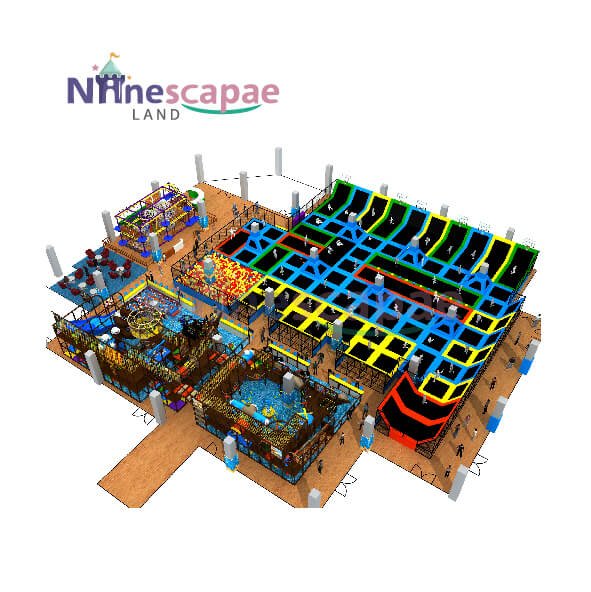
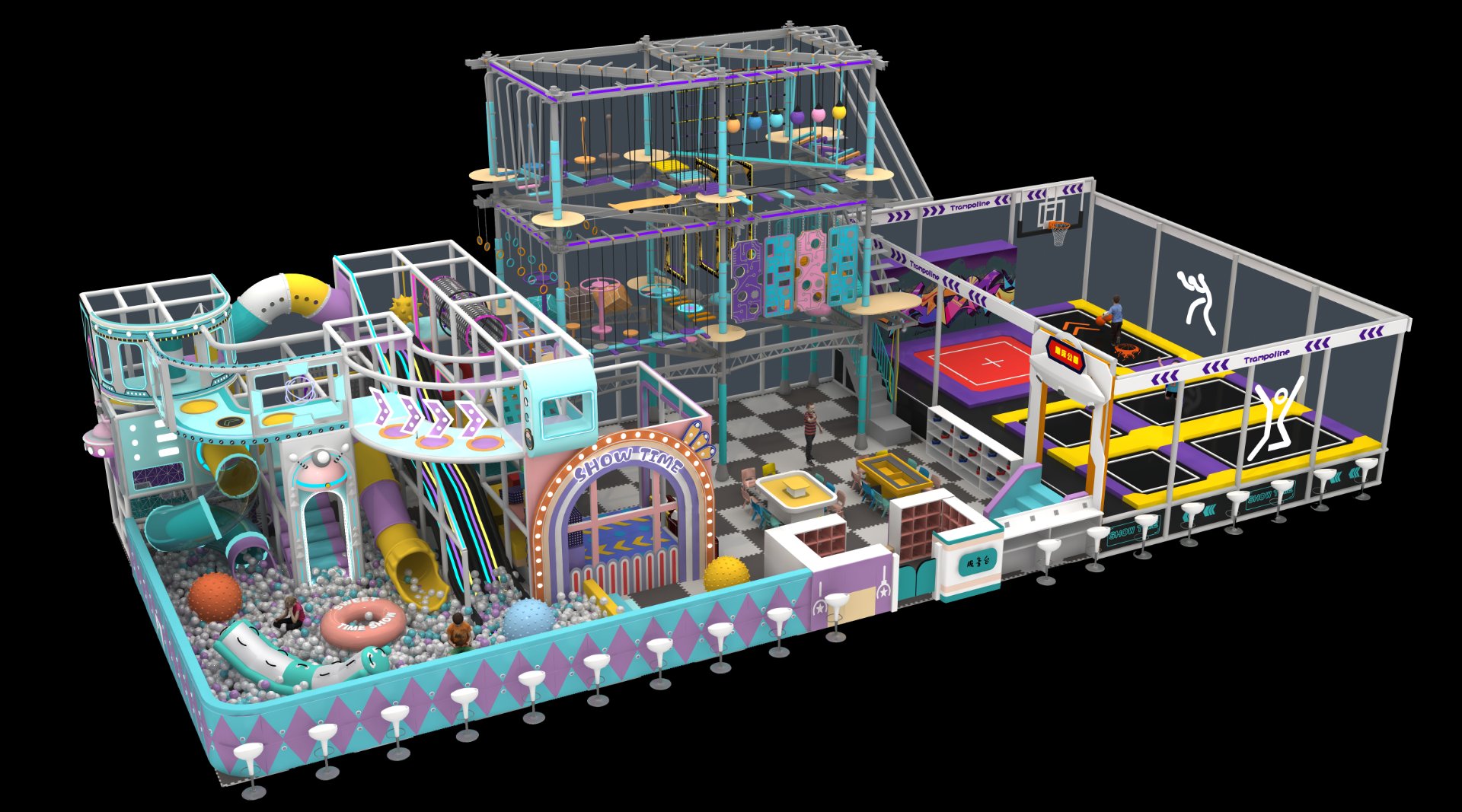
Group capacity, rotation length and pack-down effort for each zone type.
| Zone | Group size | Rotation | Footprint | Pack-down |
|---|---|---|---|---|
| Timed obstacle circuit | 8–12 | 15–20 min | 40–80 m² | Fixed / semi-fixed |
| Ball target & relay | 10–20 | 15–20 min | 30–60 m² | 20 min |
| Two-tier traverse wall | 4–8 | 15 min | 12–25 m² | Fixed |
| Mobile soft-play set | 6–12 | 20 min | 20–40 m² | 10–15 min |
| Roll-out activity mats | 10–24 | 15 min | 30–70 m² | 10 min |
| Quiet regulation nook | 1–3 | As needed | 4–8 m² | 5 min |
Group sizes assume one supervising adult per zone at a 1:10 to 1:15 ratio and open sightlines from two standing points.
Best-Fit Buyers
Fixed-clock, staff-limited providers get more from rotation-ready zones than from a single large structure.
Providers sharing a gym or hall who need equipment that packs down daily and passes a caretaker's inspection.
Multi-purpose halls serving several age cohorts across a week, where reconfiguration matters more than theming.
Programmes that pair academic blocks with movement breaks and need a low-arousal wind-down zone next to a high-output one.
Volunteer-staffed groups with wide age ranges, where open sightlines reduce the number of adults needed on the floor.
FAQ
Activities that occupy 8–15 children for 15–20 minutes without an adult running the game: timed obstacle circuits, scored target and relay walls, two-tier traverse climbing and marked mat games. Build three or four such zones so a session rotates instead of queueing.
Plan roughly 3–4 m² of active floor per child on the floor at once, so a 40-child session needs about 120–160 m² across three or four zones plus circulation and a store for mobile equipment.
Use wheeled bases, stackable soft-play, roll-out mats and a labelled trolley store. The target is a two-person pack-down in under 15 minutes, with nothing that marks or loads a sports floor beyond its rating.
Split by difficulty tier rather than by area: separate entries and two route lines on the same equipment, high-output zones on one side, and a low-arousal zone for the youngest cohort and for wind-down before pickup.
Most programmes run 1:10 to 1:15 for school-age children. The layout must let each adult see every play position in their zone from two standing points, which rules out enclosed tubes and solid-panel houses.
Yes. We build mobile soft-play, wheeled obstacle elements and roll-out mat systems alongside fixed structures, and provide a 3D layout showing rotation flow, sightlines and the store footprint before you order.
Safety and compliance claims on this page reference the following primary standards and regulatory publications.
Datos de las fuentes a fecha de septiembre de 2026
Fill out the form below and our team will send you a custom design proposal and competitive quote within 24 hours.
Get an instant response from our team via WhatsApp. We're online 12+ hours daily.
🎯 We respond to all inquiries within 24 hours with a free 3D design concept and detailed quote — no commitment required.