
Give feedback in under two seconds
A timer, a light, a bell, a score or a visible wobble tells a child immediately whether the attempt worked. Equipment with no feedback signal loses to a phone within minutes, no matter how large it is.

Screen-Time Demand · Physical Challenge · Real Social Play
Parents are actively looking for screen-free alternatives, and operators can turn that demand into floor space. This guide shows which physical play formats replace screen time credibly, how long each holds attention, and how to programme and market them.
Design Framework
Screens hold attention through fast feedback, visible progress and social status. Physical play only replaces them when it delivers the same three things — which is a design decision, not a marketing claim.
A timer, a light, a bell, a score or a visible wobble tells a child immediately whether the attempt worked. Equipment with no feedback signal loses to a phone within minutes, no matter how large it is.
Timed runs, graded route colours and difficulty tiers let a child fail, adjust and retry. Three to six attempts on the same element is the signal that the loop is working.
Head-to-head lanes, relay teams and posted weekly best times supply the social layer children otherwise get online. This is why racing formats out-perform single-user equipment.
High-arousal play with no low-arousal exit produces meltdowns at pickup. Pair every challenge zone with a construction, sensory or quiet space children can move into on their own.
Avoid making core play dependent on projection or an app subscription. Mechanical timers, sensor lights and scoreboards give feedback without a licence that can lapse or a device that fails.
Weekly time trials, badge levels, cooperative build challenges and a printed progress card turn a play visit into a programme parents will pay for and repeat.
Equipment Mix
Each format below supplies fast feedback, visible progress or a social frame — the three things screen time provides.
Start and finish gates with a visible clock. The strongest screen-free format because failure is instant, retry is cheap and times can be posted weekly.
Parallel climbing, slide or run lanes. Competition supplies the social status layer, and two children occupy the element simultaneously rather than queueing.
Colour-coded routes on a low traverse wall under a 1.5 m fall height, giving a clear difficulty ladder children self-select and progress along.
Bounce, target and dunk bays where each attempt gives immediate physical feedback and skill visibly improves within one session.
Large-scale soft blocks, planks and connectors for group building. Delivers open-ended play and functions as the low-arousal wind-down space.
Tactile panels, textures and a cushioned nook so over-stimulated children regulate inside the venue instead of being handed a phone.
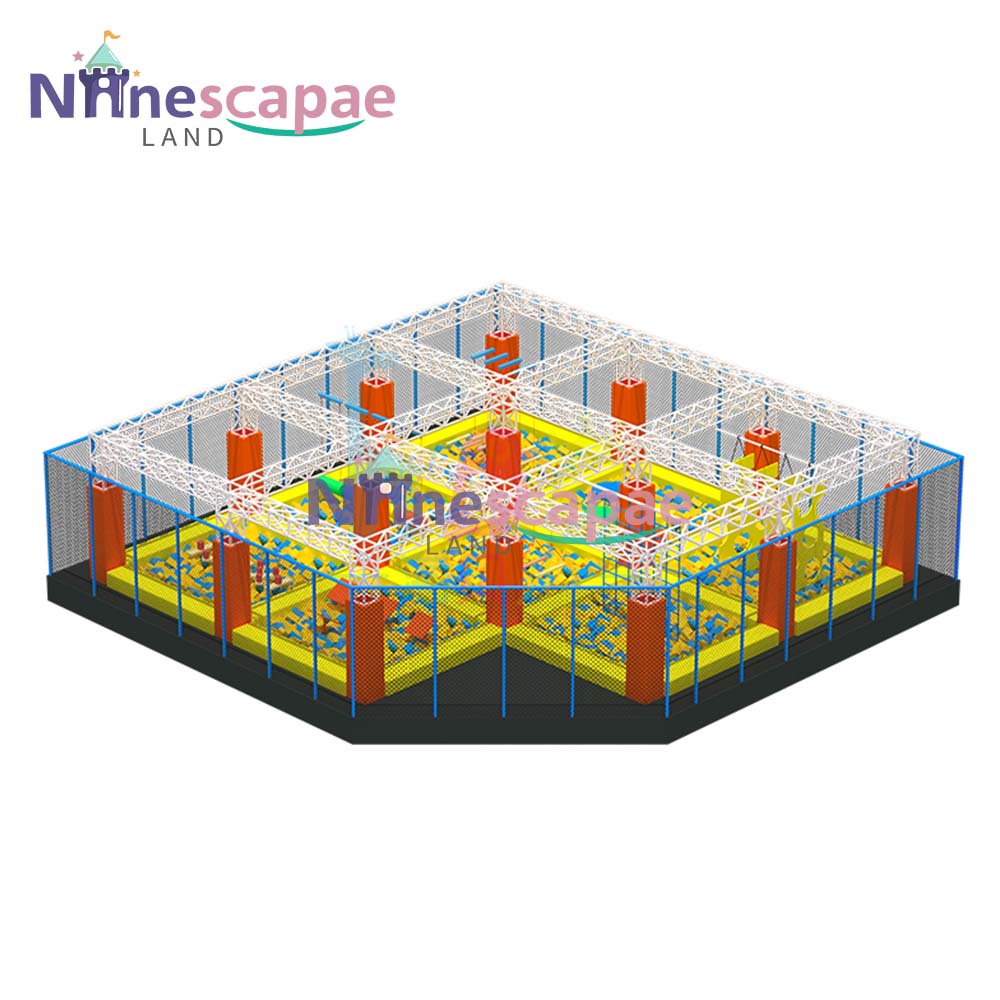
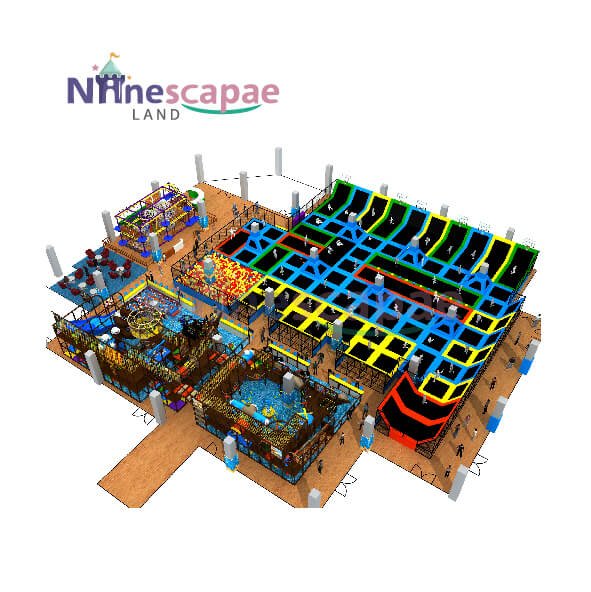
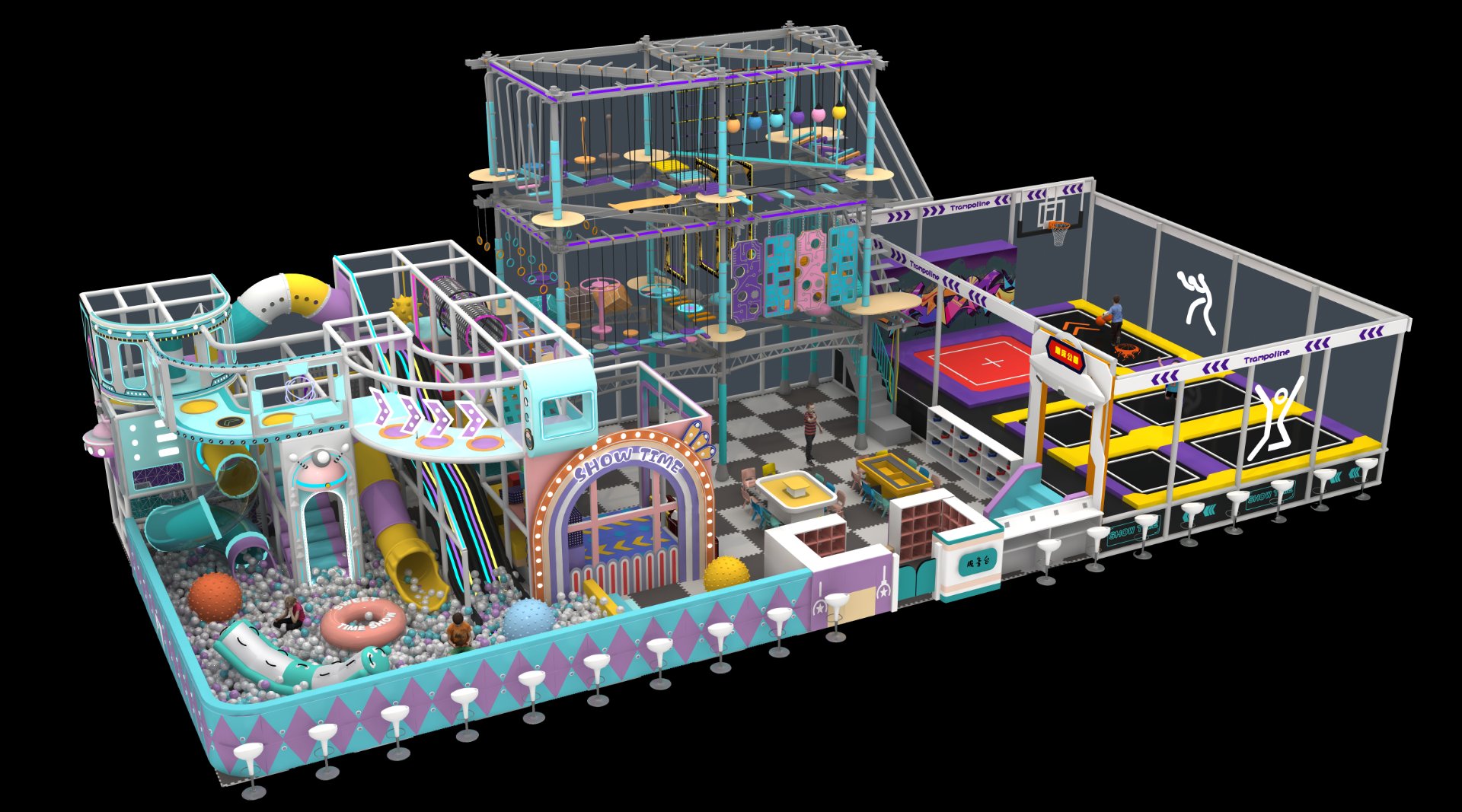
Attention hold, feedback type and space demand for each screen-free format.
| Format | Dwell | Feedback | Social frame | Footprint |
|---|---|---|---|---|
| Timed obstacle run | 20–40 min | Clock + gates | Weekly leaderboard | 40–90 m² |
| Head-to-head lanes | 15–30 min | Direct race result | One-to-one contest | 25–60 m² |
| Graded traverse wall | 15–25 min | Route completion | Level progression | 12–30 m² |
| Trampoline skill bays | 20–35 min | Physical / target hit | Group turns | 50–120 m² |
| Construction zone | 25–45 min | Build stands or falls | Team build | 20–50 m² |
| Sensory retreat | 5–15 min | Tactile response | Solo or pair | 4–10 m² |
Dwell figures are observed operator planning ranges for children aged 5–12 and vary with group size, staffing and how the zone is programmed.
Best-Fit Buyers
Operators and institutions whose audience is actively choosing away from screens.
Operators who can market a screen-free floor as a differentiator against arcade-led competitors and lift repeat visits with time-trial programming.
Programmes needing movement blocks with measurable outcomes to report to parents, without adding devices or subscriptions.
Centres whose parent communications already promise limited screen exposure and need physical play that credibly backs the claim.
Venues replacing tablet corners with compact challenge equipment that occupies children for 20–40 minutes without staff running a device.
FAQ
Formats that copy what screens do well: timed obstacle runs, head-to-head racing lanes, graded climbing routes, trampoline skill bays and cooperative construction. Each gives feedback within seconds, shows visible progress and provides a social frame.
Because it gives no fast feedback. Equipment with a clock, light, target or score keeps children retrying three to six times; equipment with no signal is abandoned quickly regardless of size or theming.
Operator planning ranges are roughly 20–40 minutes per challenge zone for ages 5–12, and 25–45 minutes for a large construction zone. Combining three zones is what produces a full session without screens.
No, and it is often better without. Mechanical timers, sensor lights and physical scoreboards deliver feedback with no software licence to renew and nothing that stops working when a subscription lapses.
Run weekly time trials, badge or level progressions, cooperative build challenges and a printed progress card. This is what turns a one-off visit into a repeat programme parents choose deliberately.
Yes. Send the floor plan, ceiling height and target age band and we return a 3D layout combining challenge, racing and wind-down zones, with fall-height envelopes, dwell estimates and a phased build order.
Safety and compliance claims on this page reference the following primary standards and regulatory publications.
بيانات المصادر حتى سبتمبر 2026
Fill out the form below and our team will send you a custom design proposal and competitive quote within 24 hours.
Get an instant response from our team via WhatsApp. We're online 12+ hours daily.
🎯 We respond to all inquiries within 24 hours with a free 3D design concept and detailed quote — no commitment required.